Maintenance
Worn Shaft: Repair It or Make a New One?
Weld build-up, sleeving or a new shaft? How to decide when a bearing seat is worn, a keyway is damaged or a shaft has bent.
2 min readBy the Alhamd Technologies team
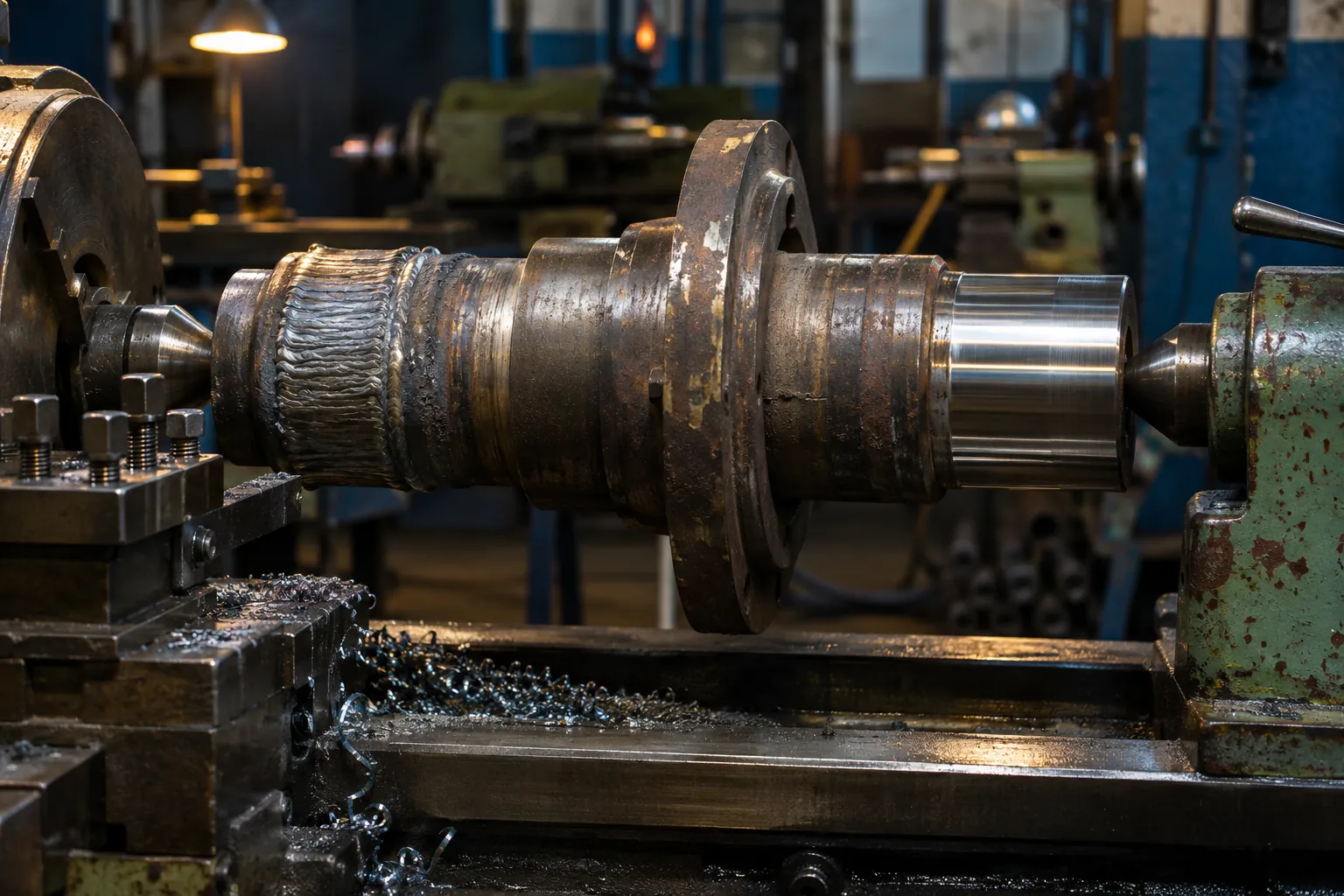
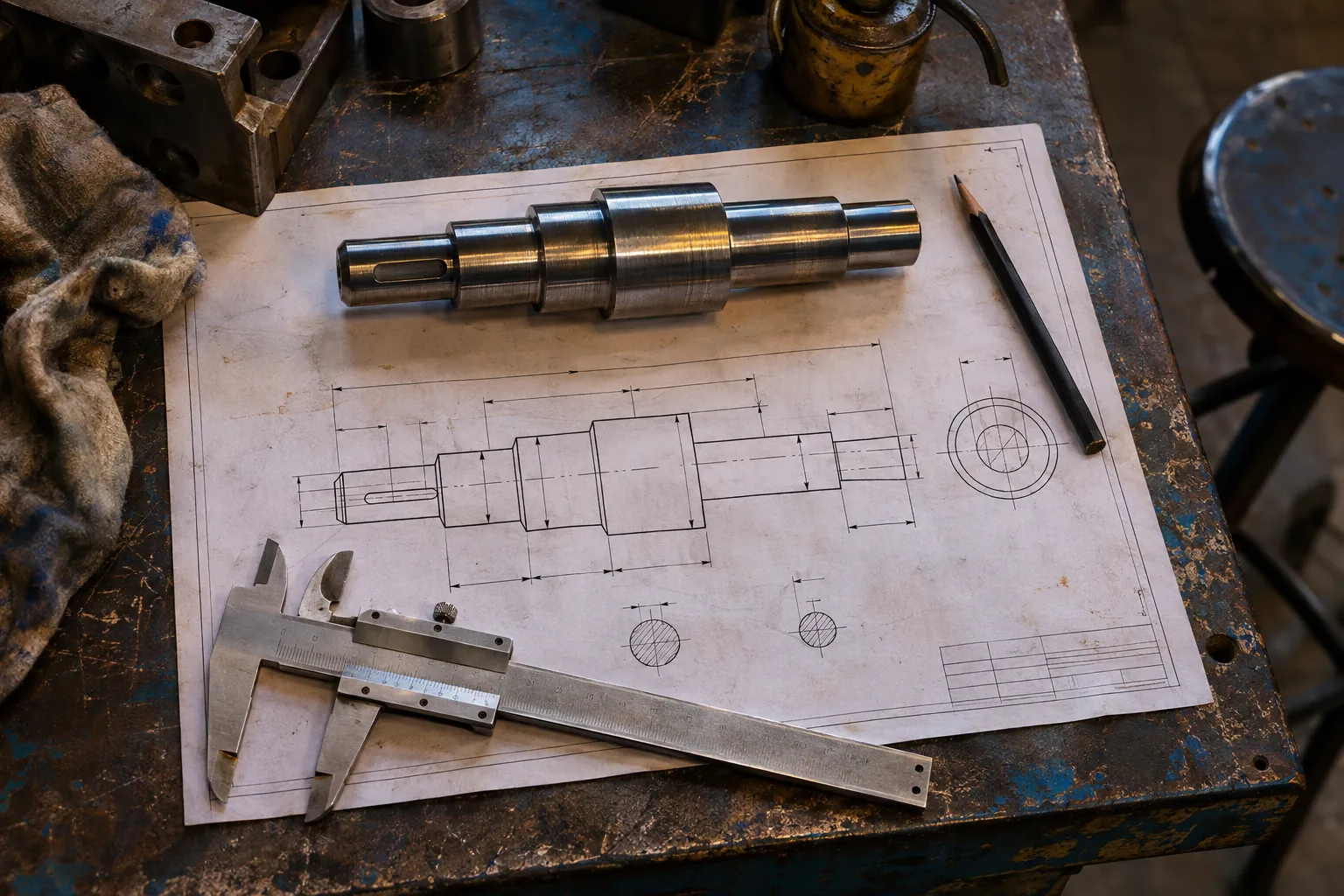
A shaft rarely fails all at once. A bearing spins on its seat, a key works loose, a seal cuts a groove, and one day the machine will not run true. The question for the maintenance engineer is always the same: can it be saved, and should it be?
Option 1: Weld build-up and re-machining
The worn area is built up with weld metal and turned back to the original size. It is quick and economical for worn bearing seats and seal areas on plain carbon-steel shafts.
It carries risk on alloy steels and on highly stressed sections, because welding heat can leave hard, crack-prone zones and can bend a long shaft. Those cases need controlled preheating, and sometimes they should not be welded at all.
Option 2: Sleeving
The damaged diameter is turned down and a sleeve is fitted over it, then finished to size. There is little heat involved, so distortion is minimal. Sleeving works well for seal and bearing areas provided enough shaft remains underneath to carry the load.
Option 3: A new shaft
Sometimes the honest answer is replacement. Make a new shaft when:
- There is a crack, especially at a step or keyway
- The shaft is bent and cannot be straightened reliably
- Wear is so deep that repair would leave too little parent metal
- The shaft has been repaired before in the same place
- A failure would endanger people or cause expensive secondary damage
Do not ignore the cause
A repaired shaft that goes back into the same misaligned, under-lubricated or overloaded machine will fail again. Before refitting, check the bearing, the housing bore, the alignment and the key fit. A loose housing is often the real culprit behind a “worn shaft”.
What to tell the workshop
Send photos of the damage, the shaft’s overall length and diameters, the bearing number if you have it, and the material if known. Mention how long the shaft ran before failing. With that, a workshop can recommend repair or replacement before you even dismantle the rest of the machine.