Materials
Choosing the Right Material for a Machined Part: MS, EN8, EN24 or Stainless?
A plain-language guide to the steel grades most Indian workshops use every day, what each is good at, and when paying more is worth it.
2 min readBy the Alhamd Technologies team
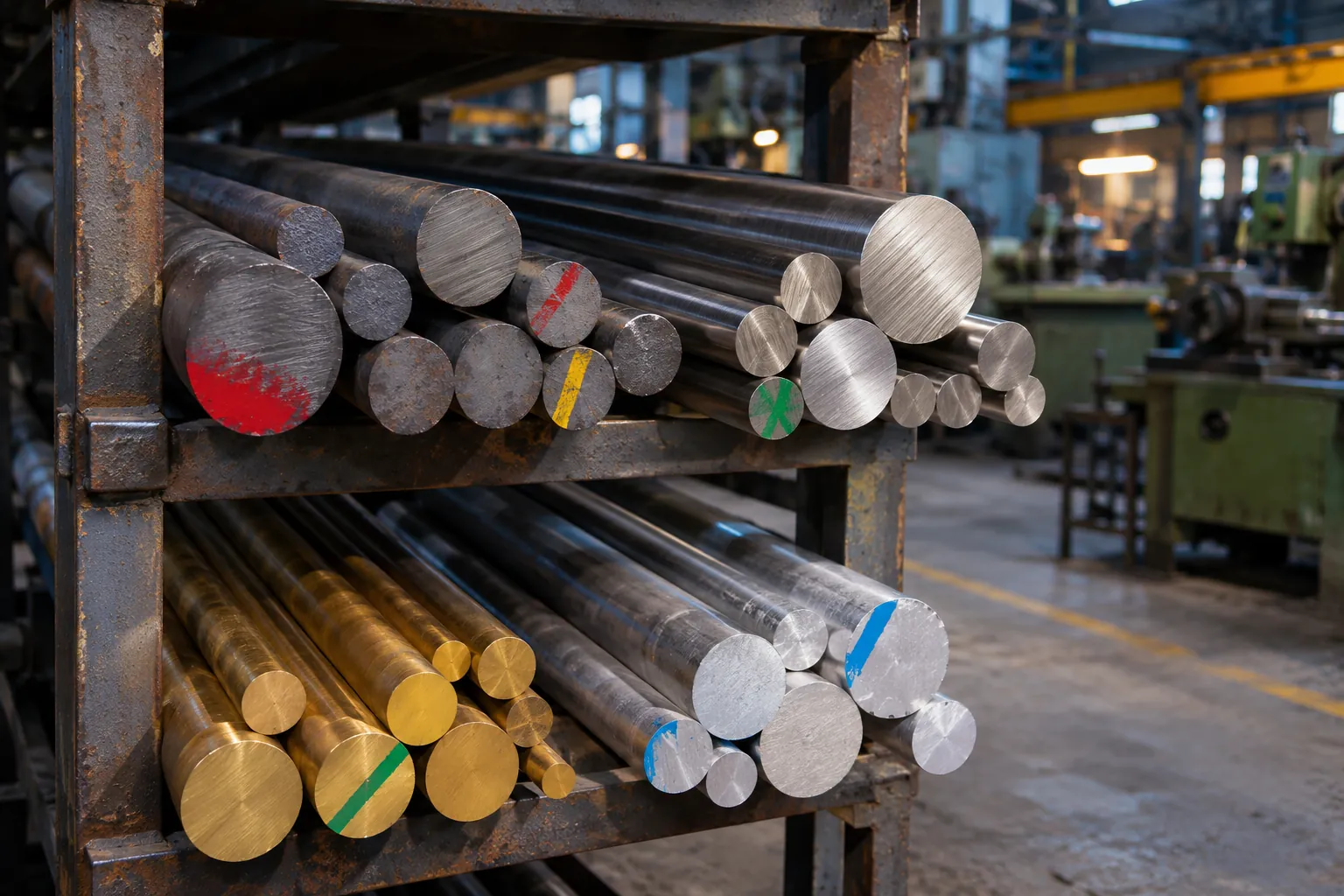
Material choice decides how long a part lasts and a large share of what it costs. Over-specify and you pay for strength you never use. Under-specify and you are back in the workshop in three months with the same broken part.
Mild steel (MS)
Cheap, easy to machine and easy to weld. Right for brackets, base plates, covers, spacers and lightly loaded parts. It cannot be hardened to any useful degree and it rusts, so it is the wrong choice for shafts under heavy load or parts in wet service.
EN8: the general-purpose shaft steel
A medium-carbon steel that is noticeably stronger than mild steel and can be hardened on the surface. Most ordinary shafts, pins, keys and studs are EN8. It is the sensible default when mild steel is not strong enough.
EN19 and EN24: for load and shock
These alloy steels are tough as well as strong, which means they resist shock and fatigue. Crusher shafts, heavy gear shafts, oilfield parts and highly stressed bolts are typical uses. They cost more and machine more slowly, so use them where the duty demands it.
EN31: for wear
A high-carbon bearing steel that hardens to a very high level. Used for rollers, wear pins and guides. It is brittle compared with EN24, so it is not for parts that take impact.
Stainless steel 304 and 316
SS 304 handles water, food products and mild chemicals. SS 316 adds molybdenum, which gives far better resistance to salt and acids; it is the grade for marine, pharmaceutical and aggressive chemical service. Both are tougher to machine than carbon steel, which is reflected in the price.
Brass, bronze and aluminium
Bronze and gunmetal are the classic bush materials because they run well against steel shafts and survive sea water. Brass suits fittings and small turned parts. Aluminium is chosen when weight matters or when a part must be machined quickly.
Three questions that settle most choices
- Does it carry load or shock? Move up from MS to EN8, then to EN19 or EN24.
- Does it get wet, salty or washed down? Use stainless or bronze.
- Does it rub against another part? Make one of the pair softer and replaceable, such as a bronze bush on a steel shaft.